Navigating Family Conflict After a Loved One's Illness: A Personal Journey

The emotional complexities of caring for a dying loved one can strain family relationships in unexpected ways. This story highlights the conflict that emerges after the loss of a mother who suffered from ALS, where one daughter stepped away from her career to become a primary caregiver, leading to feelings of resentment among siblings when it came time to settle their mother's estate. Such situations raise deeper questions around sacrifice, recognition, and fairness, urging us to consider not only emotional bonds but also the financial realities that accompany caregiving.
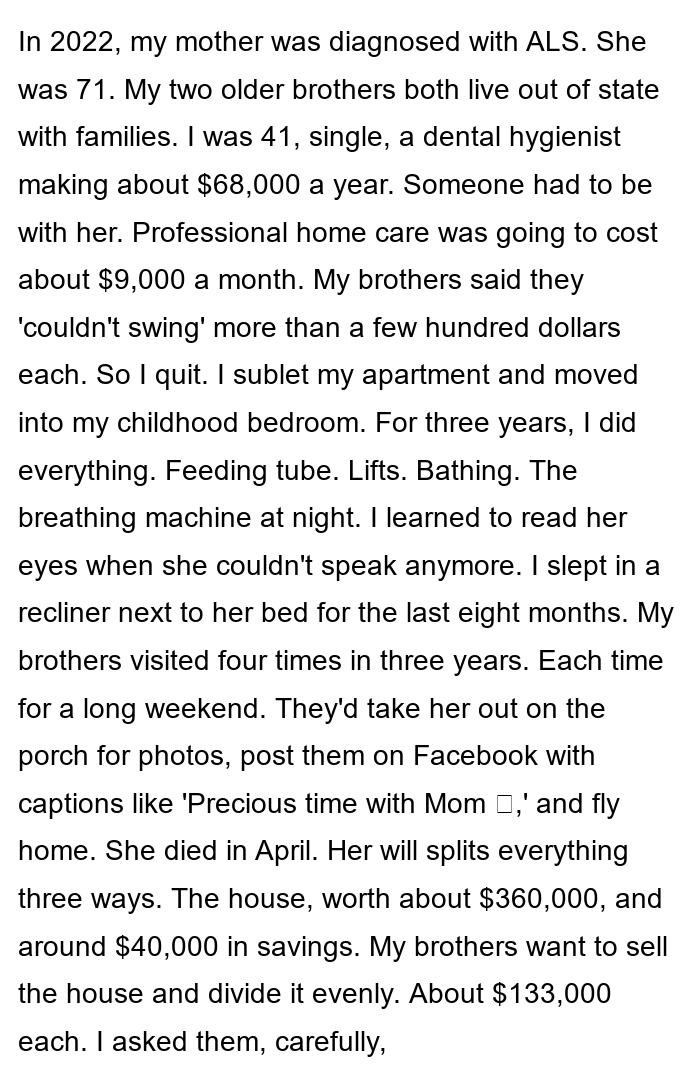


Contextual Insights
Caring for a terminally ill loved one often falls disproportionately on one family member, which can lead to emotional and financial ramifications. The story reflects the dilemma of sacrifice versus acknowledgment; the caregiver often feels unseen or underappreciated despite their significant contributions. The difficulties of the caregiver's role include not only physical demands but also emotional stress stemming from a lack of support from other family members. The emotional burden of feeling that one's sacrifices have gone unrecognized can lead to feelings of resentment and conflict within the family.
From a financial perspective, this situation highlights the implications of caregiving when the caregiver has to leave their job. The potential for lost wages, retirement savings, and career opportunities can create a rift when it comes to splitting an estate. In some states, caregivers may have the legal right to claim compensation from the estate. However, without prior agreement or documentation, pursuing this path could jeopardize familial relationships. This situation can serve as a valuable lesson in the importance of clear communication and agreements among family members, especially when dealing with the complexities of caregiving and estate management.
Moreover, it is essential for families to understand the emotional and financial stressors that caregiving may impose, and to approach such sensitive topics with empathy and support. Equitable solutions should prioritize transparency and mutual understanding to prevent ongoing familial strife. In some cases, professional mediation, whether legal in nature or emotional in the form of family therapy, could be beneficial in resolving these conflicts effectively.
Life Advice
Navigating family dynamics during a loved one’s illness requires careful communication and emotional intelligence. If you find yourself in a caregiver role, it’s crucial to establish boundaries and maintain an open dialogue with siblings or other family members about expectations. This includes discussing the responsibilities of caregiving and the potential impact it may have on your finances and well-being. Transparency allows family members to appreciate the sacrifices made and helps prevent resentment from building over time.
Additionally, consider the importance of recognition—not just of the emotional labor involved in caregiving, but also the physical and financial costs it can impose. When discussing inheritance or estate concerns, framing the conversation around fair acknowledgment of contributions can pave the way for a healthier dialogue. Clear agreements about how caregiving responsibilities will be valued can provide a framework that honors each person's circumstances and sacrifices.
If you're feeling overwhelmed by the demands of caregiving, don't hesitate to seek external support. Whether it's through professional counseling or joining support groups, connecting with others can offer perspective and relief. Allow yourself to prioritize your own emotional and physical health, which is vital for maintaining well-being in the face of such challenges.
Lastly, approach discussions about compensation or reimbursement gently but assertively. Sharing your perspective, grounded in your experiences, encourages understanding and shows how these issues affect you deeply. Ultimately, consider what you value most—family harmony or financial recompense—and let that guide your decisions moving forward. Seeking professional support, whether legal or emotional, can help you navigate these discussions while preserving family relationships.
Conclusion
The story underscores the intricate dynamics that emerge when one family member assumes the role of caregiver, often at great personal and financial cost. The conflicts surrounding compensation and acknowledgment after a loved one’s passing highlight the need for open communication and mutual respect among family members. As families confront the realities of caregiving, it becomes crucial to address not only the emotional turbulence but also the practical implications of those sacrifices. Recognizing the contributions of caregivers, ensuring financial transparency, and engaging in thoughtful discussions can foster unity rather than division during such challenging times. Ultimately, however, it is vital for family members to navigate these situations with compassion, understanding, and the willingness to address difficult subjects head-on, striving for a balance between recognition of contributions and the preservation of familial bonds.
The community verdict, based on 0 comments.
Keep reading
 NTA
NTANavigating an Inherited Home: Balancing Family Legacies and Personal Choices
Inheriting property can often come with complex emotional and ethical dilemmas, especially when the past is intertwined with unspoken relationships. This is the case for the niece of Joanne, who left her home to her after a lifetime with he
 NTA
NTAThe Complicated Legacy of a Family Engagement Ring: Navigating Emotions in Relationships
Getting engaged is often a moment of joy and celebration, but it can also unearth complex emotions, especially when family history and previous relationships intertwine. This particular story reveals the emotional turmoil surrounding an hei