lv-55 - A Pastor's Wife Reflects on Faith and Pretense After 19 Years of Marriage
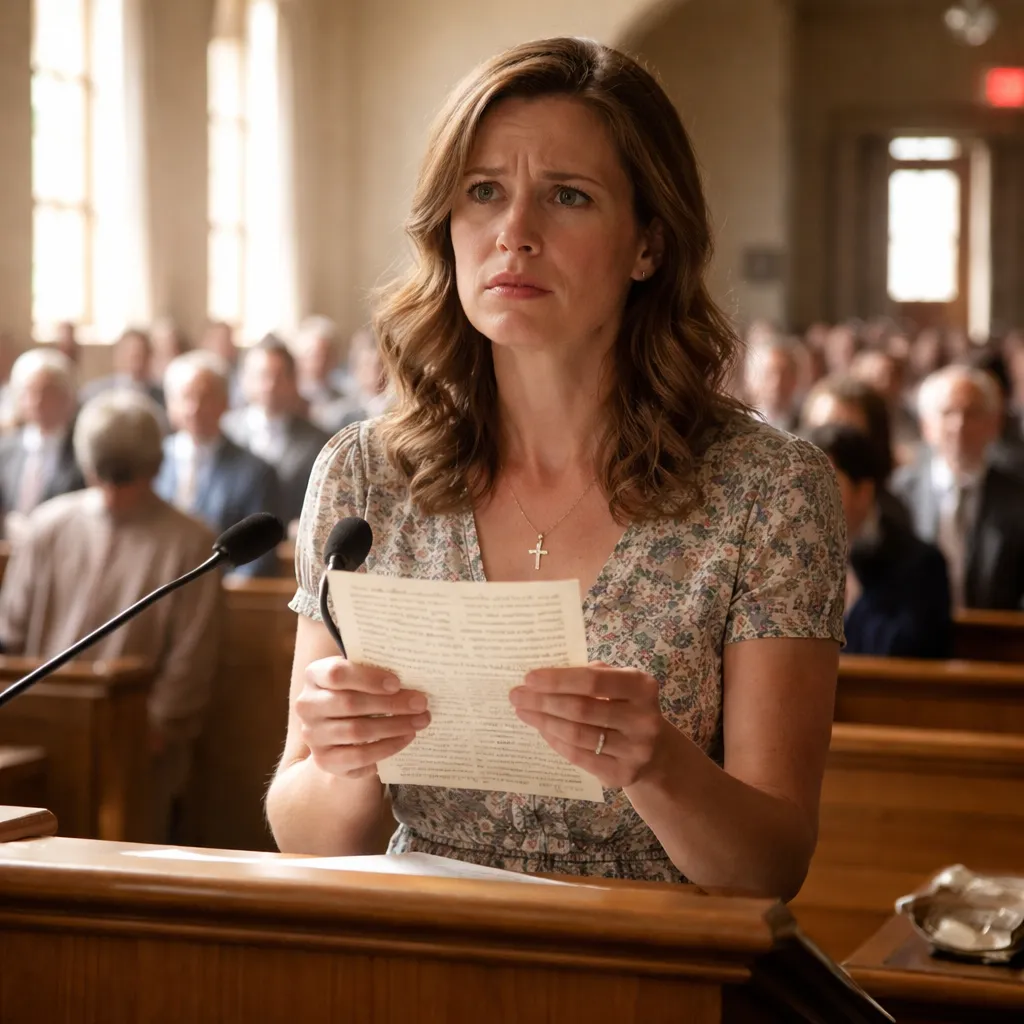
Balancing Faith and Personal Truth: A Pastor's Wife's Struggle with Belief and Community Expectations
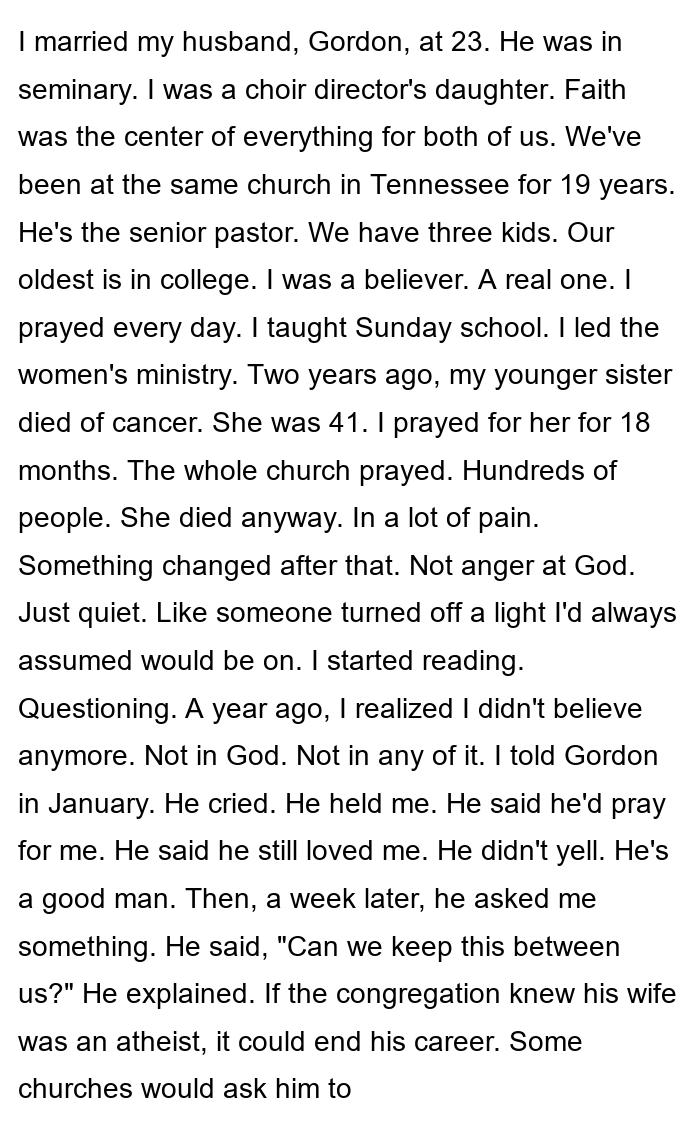
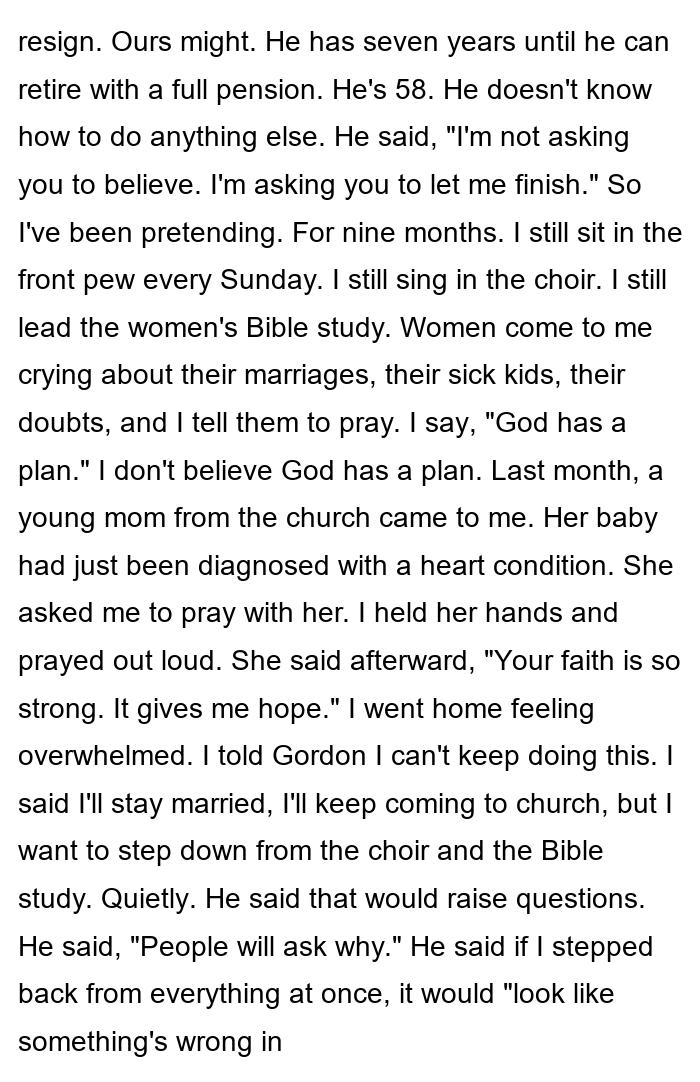
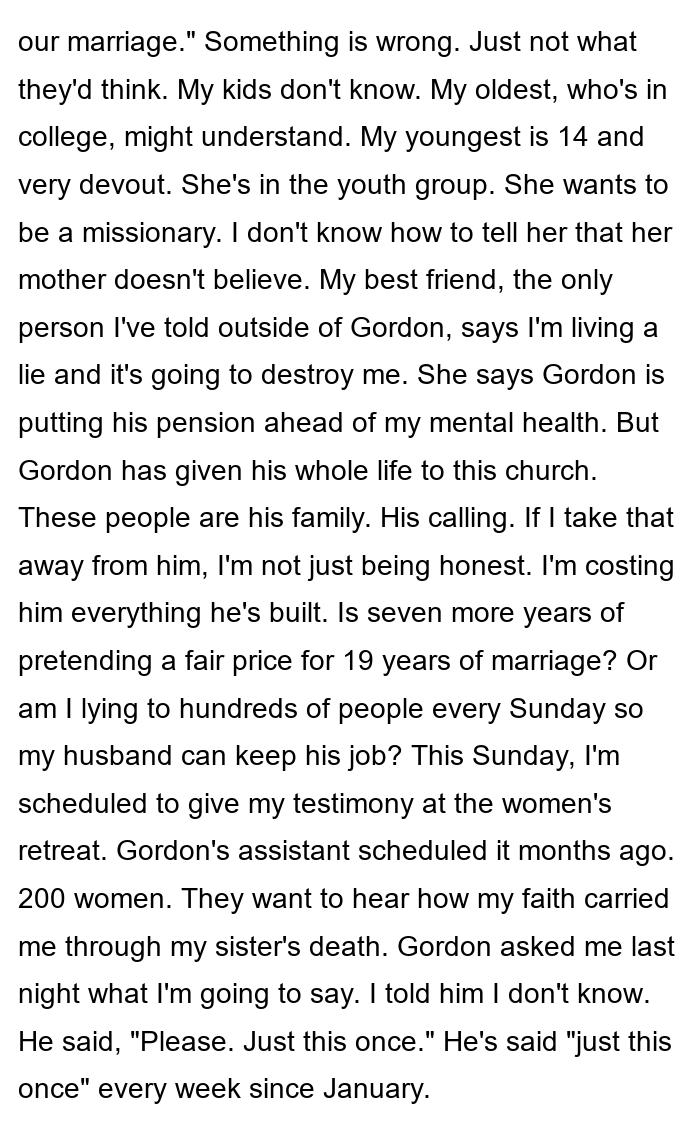
Navigating the complexities of faith, marriage, and personal belief can be challenging, especially when they intertwine with community expectations. In the story of a pastor's wife grappling with her newfound atheism after her sister's tragic death, we explore the emotional weight of maintaining a facade for the sake of a spouse's career. This situation underscores the delicate balance between personal truth and familial love, revealing the vulnerabilities and dilemmas faced by those who find themselves in similar predicaments.
Contextual Insights
The core of the narrative reveals the intense internal conflict faced by the pastor's wife as she grapples with the juxtaposition of her personal beliefs and her husband's professional life. The pressure to maintain this charade stems from an environment where faith is deeply intertwined with identity. This underscores a broader societal issue wherein the expectation of unwavering belief can generate distress, particularly following a traumatic event, such as the death of a loved one. The loss of her sister catalyzed her questioning of faith and belief in God, leading to psychological complexities that include profound grief and identity dissonance.
For individuals in similar situations, this story serves as a reminder of the emotional ramifications of living a double life. The psychological burden of pretending can lead to increased stress, anxiety, and feelings of isolation. When one's beliefs shift, the fear of rejection by a close-knit community can impact mental health. Furthermore, it brings to light the often unspoken rules governing relationships within faith communities, particularly concerning authenticity and transparency.
From a practical standpoint, dealing with these deep-seated issues often requires careful navigation of personal and relational dynamics. For those experiencing a crisis of faith, reaching out to a trusted friend, counselor, or therapist can provide support in processing these feelings. It's essential to recognize that a partner's career can complicate matters, as seen through Gordon's fear of losing his position if the truth emerged. In such cases, weighing the costs of honesty against loyalty and commitment is vital. Professional support may be warranted to facilitate healthy conversations around faith, identity, and the pressures of community expectations.
Life Advice
For anyone who finds themselves in a similar predicament, it’s critical to approach the situation with both self-compassion and honesty. Remember that feeling uncertain about faith does not diminish one's value or identity. Engaging in self-reflection can be beneficial in unpacking the emotional complexities involved. Journaling thoughts and feelings related to belief can provide clarity and help in understanding what this significant change means personally.
When considering conversations with your spouse or close friends, it’s essential to create a safe environment where such discussions can happen without judgment. Using 'I' statements can facilitate a more open dialogue—express how you feel about your beliefs and the pressure of maintaining appearances without placing blame. Honest communication is key to navigating these sensitive waters, ensuring both partners feel understood.
It’s also helpful to seek out communities that encourage open dialogue about faith and belief transitions. Support groups, online forums, or workshops can provide valuable spaces for sharing experiences and exploring new ideas without fear of retribution or ostracism. Connecting with others who have faced similar challenges can help alleviate feelings of isolation.
Ultimately, while you may feel torn between honesty and loyalty, prioritizing mental health is crucial. Recognizing when the burden becomes too heavy and determining what boundaries are necessary is an act of self-care. Engaging with a mental health professional can offer tools to cope with any emotional distress stemming from this duality, providing a pathway to a more authentic life.
Conclusion
This poignant story highlights the intricate balance between personal truth and familial loyalty, showcasing the psychological distress that can arise from maintaining a facade. It brings to the forefront the timeless question of how to honor both one's beliefs and the commitments we have made to those we love. For individuals in similar circumstances, it is crucial to find ways to navigate these challenges without compromising one's mental health or identity. Seeking open communication, supportive communities, and professional guidance can pave the way for healing and authenticity. Ultimately, this journey showcases the importance of self-awareness and the real need for balancing personal truths with the relationships that shape our lives.
The community verdict, based on 0 comments.
Keep reading
 NTA
lv-61 - A Family Hardware Store's Legacy: My Mother's Dying Wish to Reunite with My Brother
Navigating Family Betrayal and Business Rivalry During a Mother's Final Wish for Unity Balancing family dynamics with business decisions can be one of life's most challenging dilemmas. This story encapsulates a conflict rooted in a family-r
 NTA
lv-72 - After Six Years of Night Classes, I Graduate Nursing School on the Same Day as My Ex-Husband's Wedding
Navigating Graduation Achievements and Family Dynamics: A Mother's Emotional Journey on a Complicated Day The journey to achieving lifelong dreams often comes with unforeseen challenges, especially in the realm of family dynamics. This stor