My 83-Year-Old Mother’s Neighbor Charged Her $400 a Month for Trash Service: Is It Fair?

Navigating the Fine Line Between Kindness and Exploitation: A Family's Experience with Elderly Care Costs
As our loved ones age, maintaining their independence while ensuring their well-being can become a complex challenge. This story highlights a real struggle faced by one family when a beloved neighbor becomes a financial burden on an elderly mother. It raises important questions about autonomy, financial awareness, and the emotional impact of caring for aging relatives. Understanding these factors is crucial for families navigating similar situations, as they balance the desire for independence with the need for protection from potential exploitation.
Contextual Insights
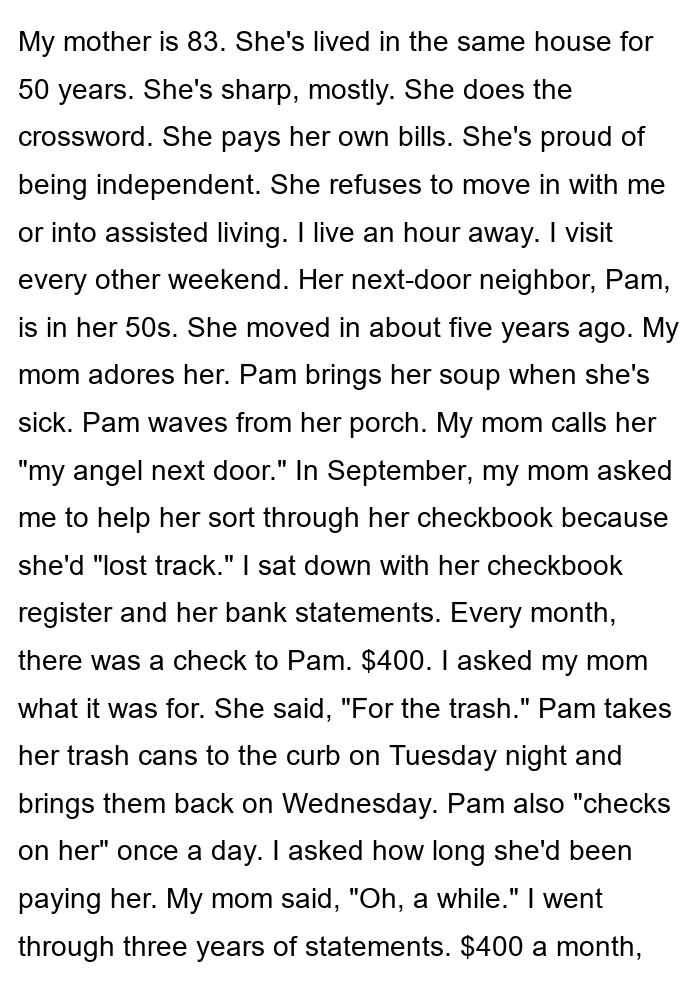
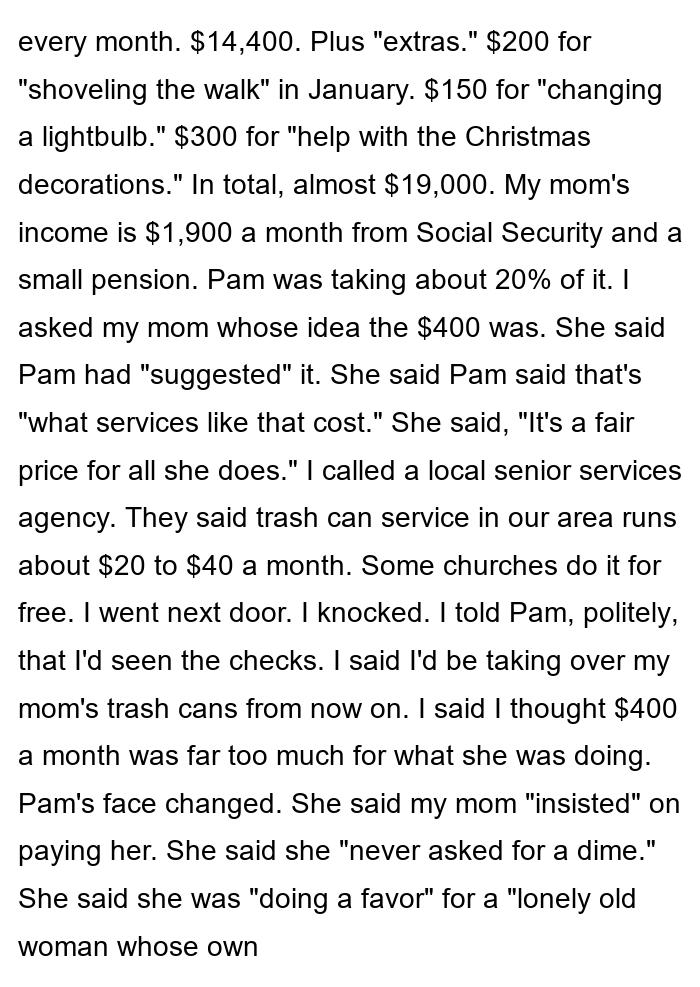
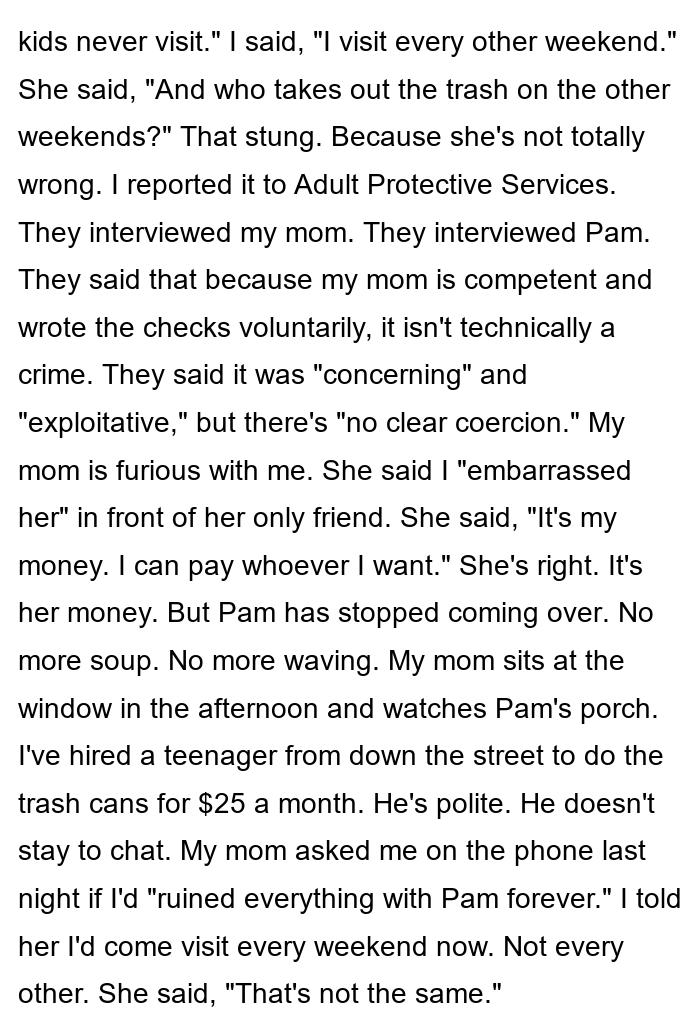
The situation depicted raises important concerns about elder financial exploitation—a serious issue that can affect many seniors who wish to maintain their independence. In this case, the mother's emotional desire for companionship and help may have contributed to her accepting unreasonable financial terms with her neighbor. Studies indicate that emotional connections to caregivers can sometimes cloud judgment regarding financial decisions. For families, it's crucial to recognize the warning signs of possible exploitation, including unusual financial transactions and services that are priced significantly higher than market rates.
The mother's strong desire for autonomy at 83 years of age is commendable, yet her financial arrangement with Pam highlights the potential risks of such independence. While the local senior services agency indicated that the arrangement was not criminal due to the mother's competence, it raises ethical questions about what is fair and necessary for care. These types of financial arrangements can lead to significant vulnerabilities in elderly populations, particularly those living alone or without regular family support. The family must balance respect for the mother's choices with her protection from potential financial loss.
Families in similar situations should consider regularly discussing finances with seniors to ensure transparency and understanding. Creating a budget that reflects necessary expenses and exploring community support options can also be beneficial—especially services that provide companionship and assistance without imposing exorbitant costs. Being informed and proactive can help prevent scenarios where seniors might be victimized by seemingly helpful neighbors or friends.
Life Advice
Navigating the complexities of care for aging parents can often feel overwhelming for families. As seen in this story, it's essential to strike a balance between respecting their wishes for independence and protecting them from potential exploitation. Begin by fostering open communication with your loved one about their financial decisions. Create a safe environment for them to express their feelings and concerns, which could significantly help you understand their perspective. Asking open-ended questions about their finances and any assistance they may need encourages dialogue and helps you gauge their understanding of the situation.
Encourage your parent to share details about their help arrangements with neighbors or friends. Conversations can reveal whether they feel pressured to pay certain amounts for services that may not be fair. Introducing alternatives, such as local community services, volunteer organizations, or even family assistance, can provide needed support without imposing financial strain. In this instance, finding a reliable teenager to take out the trash for a fraction of the price demonstrates a practical solution that maintains the mother's autonomy while safeguarding her financial resources.
Reiterating the importance of family involvement is fundamental. Regular visits can ease feelings of loneliness, which may diminish reliance on neighbors for social interaction. By becoming more involved in their lives, you can be there to ensure they're safe and making sound financial choices. Your presence may help mitigate emotional distress and vulnerability, as shown by the mother's reaction when faced with losing her neighbor's support.
If you suspect harmful financial behavior, don't hesitate to consult local resources, such as adult protective services or senior care agencies. While they may not always find clear legal violations, they can provide valuable advice on how to handle the situation delicately yet effectively. Lastly, it’s crucial to acknowledge your loved one's emotions. Their pride in independence is important, so express understanding while highlighting the necessity of protecting their well-being.
Conclusion
In conclusion, the story of a mother and her neighbor underscores the delicate balance between supporting independence in aging parents and protecting them from possible exploitation. It highlights that while emotional ties to neighbors or caretakers can provide companionship, they can also lead to unwise financial decisions that impact their quality of life. Engaging in proactive conversations about these topics and seeking transparent arrangements can alleviate some of the stress that children feel when caring for aging parents.
With increased involvement and open dialogues, families can work together to manage care in a way that respects their loved one's autonomy while ensuring their financial health. The emotional and psychological aspects of these relationships cannot be overlooked, as they profoundly affect both parties' well-being. Encouraging community connections, such as using local services that are transparent in their pricing, can preserve dignity and respect for aging individuals. Ultimately, navigating these dynamics is a shared journey that requires sensitivity, care, and practical strategies for a positive outcome.
The community verdict, based on 0 comments.
Keep reading
 NTA
My father wishes to be buried under the oak tree on our land, but my wife is firmly against this request.
Confronting Family Wishes: Balancing Deep Emotional Bonds with Practical Considerations in End-of-Life Decisions The difficult intersection of family emotions and practical decisions often surfaces in times of crisis, particularly when navi
 NTA
Our dog went missing during a storm and was found by a homeless man. My husband is furious about the $1,000 reward I gave him.
The Unforeseen Impact of Compassion: A Family's Dilemma Over a Generous Reward for a Lost Dog's Rescue In a world often marked by suspicion and caution, a family's desperate search for their lost dog, Penny, turned into an unexpected tale o